Cutting Processes Compared

Cutting Process Compared Hero 001

Laser Cutting Advantages

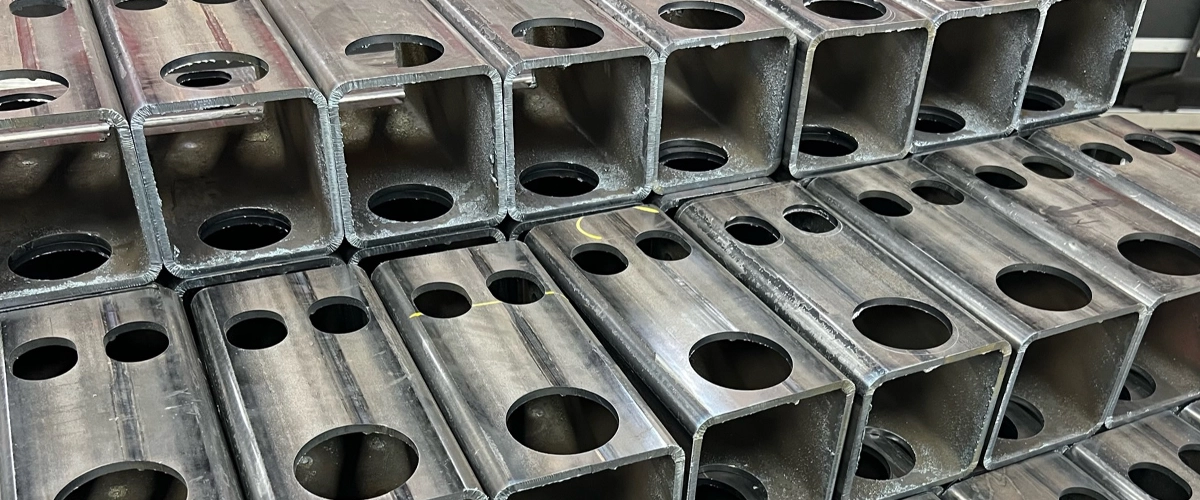
  • Fiber Laser cutting machines are efficient at cutting all types of materials in thin or thick gauges. Material as thin as .001” to 1”+ can be cut by a Fiber Laser Cutting machine.
  • Fiber Laser cutting is also highly effective in cutting materials that require higher tolerances and sharper details. Most times, +/- .003” can be achieved.
  • Fiber Laser machines can achieve cutting feed rates up to 9,000 inches per minute and rapid feed rates to 13,300 inches per minute, laser cutting provides the speed for any high-production cutting.
  • Using a material loading system paired with a parts picking robot, lasers can be run un-attended 24/7. This allows quick set-up time and flexible cutting operations. The robust construction of Laser Cutting machines allows for positioning accuracy of 0.002”. The energy usage of a Fiber Laser is 1/3 of the usage required for all other cutting machines.

Router Cutting Advantages

  • CNC Router cutting provides the ability to get machined edge and details on soft materials.
  • Achieve tapping, countersinking, counterboring, and milled out details all in one set-up.
  • The CNC Router uses a vacuum bed so expensive fixtures are rarely needed and setups can be completed quickly.
  • Generally, the machining can be completed with basic tooling.

Water Cutting Advantages

  • Waterjet Cutting has long been known as an efficient method of cutting a wide variety of materials. Thanks to its ease of programming and its ability to efficiently cut through any material and any thickness it is the process of choice for many tough applications.
  • Waterjet cutting is a process that uses high-pressure water and abrasive to cut material quickly, economically, and without harm to the environment. The Waterjet cutting head does not touch the material, so precise shapes and angles can be cut very easily. The cutting process is computer-controlled, so cutting multiple parts requires almost no additional setup time.
  • There is no thermal distortion or edge hardening of the material being cut by Waterjet, whereas lasers create burned, hardened edges.
    Waterjets can hold the same tolerances as lasers on thin materials, and higher tolerances on parts thicker than 0.5″, this improves further as the thickness of the material increases.
  • Waterjets can cut thicker materials. Up to 13″ thick or thicker in special applications.
cutting-processes-compared
ProcessPart CostPart PrecisionPart TurnaroundMaterial Type RestrictionsMaterial Distortions or StressesCut Quality
LaserLower+/- .002”FastestNoNoSmooth
WaterjetHigher+/- .010”SlowerNoNoSmooth
RoutingLower+/- .003”Faster on thinner materialsYesNoSmooth
MillingLower+/- .001”SlowerNoYesSmooth
Wire EDMHigher+/- .001”75% slowerYesYesSmooth
Punch PressHighest on low volume+/- .005”SlowerYesYesBurred Edges

Looking for Additional Metal Fabricating Services?

Precision Laser Cutting
CNC Machining and Milling
Press Brake
CNC Routing
Waterjet Cutting

In addition, AST also offers Assembly Services to complete your product. We also offer complete CAD/CAM Programming Services for putting your project into production.

ast-nqa-iso-9001-quality-management
ast-ul-certification